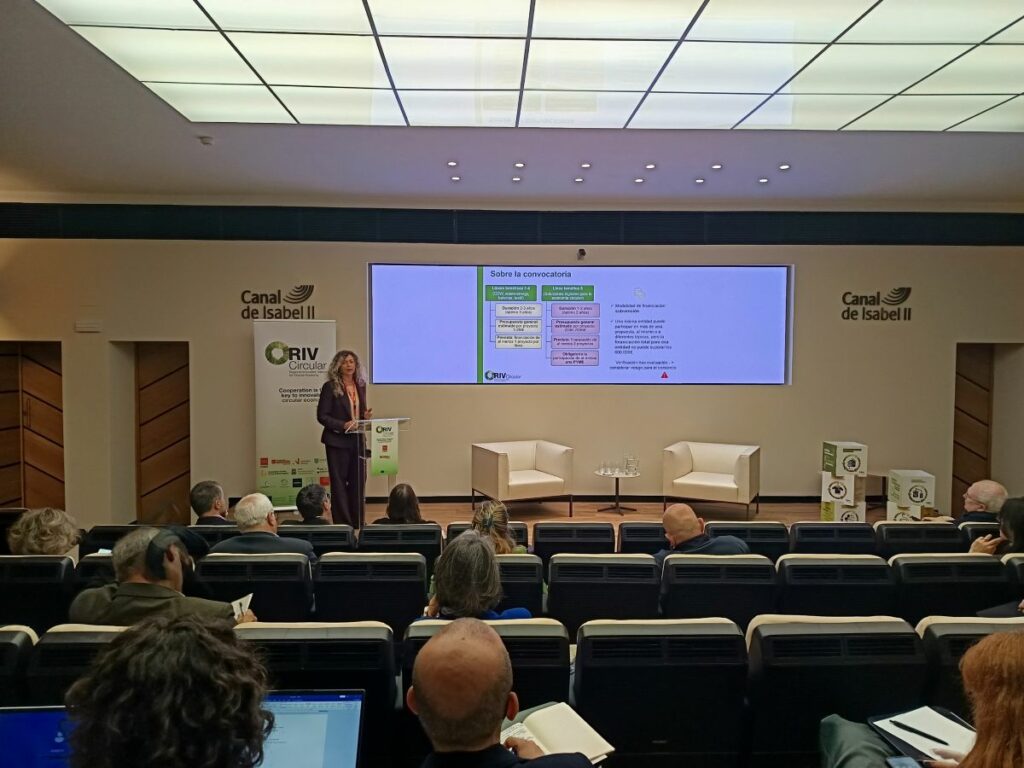
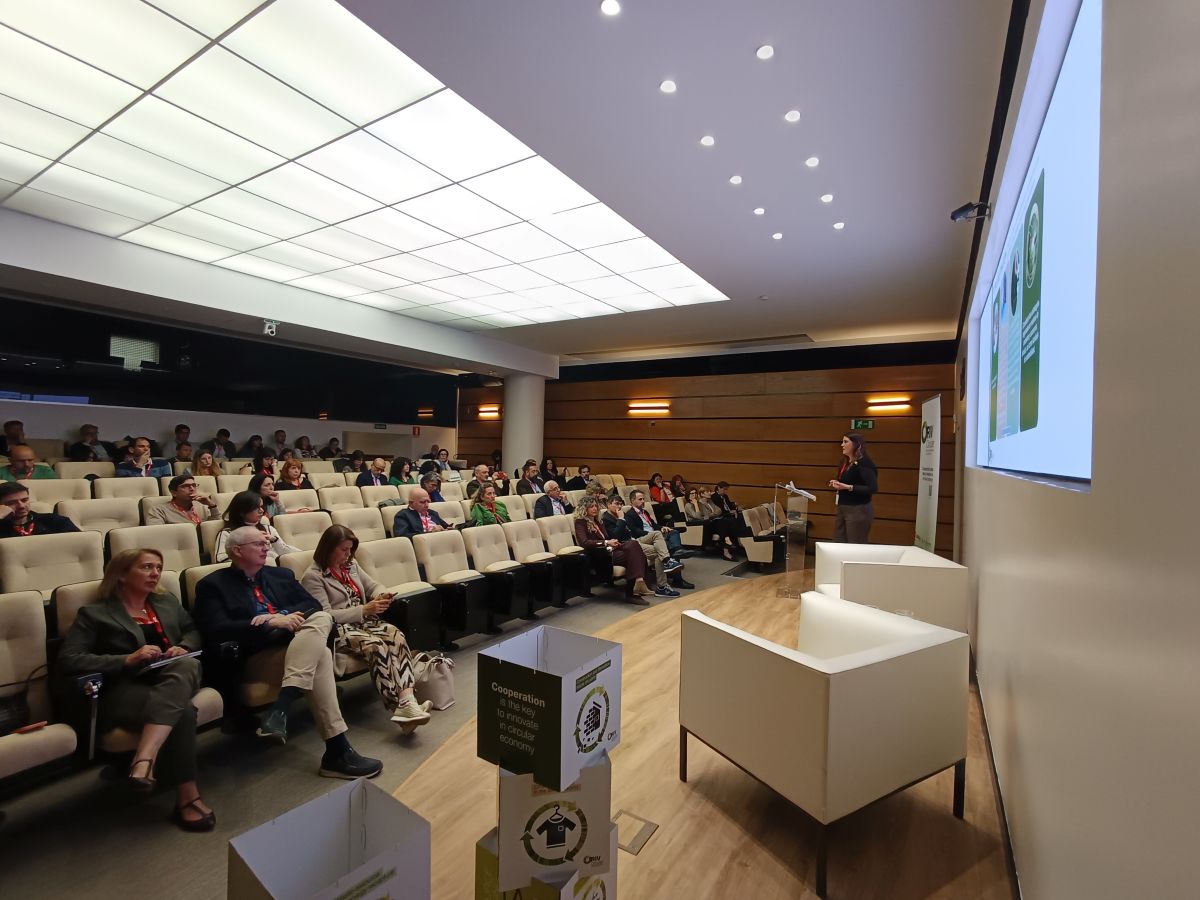
Madrid InfoDay was a networking and information event bringing together organisations from Madrid’s circular economy ecosystem to explore collaboration opportunities, exchange expertise and foster future innovation projects. The session gathered 60 organisations from industry, academia, research and civil society working on circular economy and sustainability challenges.
The event successfully facilitated networking, knowledge exchange and collaboration opportunities in key thematic areas related to circular economy and digital transformation.
During the session, the upcoming RIVCircular Open Call was presented. The initiative will support interregional innovation projects aimed at accelerating the transition towards a circular economy in Europe through collaborative projects and innovative solutions with high market potential and technological maturity (TRL 6–8). The programme particularly targets projects addressing strategic circular economy challenges in areas such as construction and demolition waste circularity, circular energy integration, electric vehicle battery recycling, circular textiles and digital solutions for circular economy (more information available at RIVCircular Open Call).
Strong innovation potential
The diversity of participants highlighted the strong innovation potential of Madrid’s circular economy ecosystem. SMEs represented the largest group of participants, followed by u niversities and research centres, together with large companies, non-profit organisations and regional associations. Participants demonstrated strong interest across all thematic areas addressed by the RIVCircular project, with particularly high engagement in circular economy solutions for the textile industry, digital solutions for circular economy and construction and demolition waste circularity. Significant interest was also observed in strategic topics such as electric vehicle battery recycling and reuse, as well as circular energy integration.
Participants demonstrated expertise in areas such as circular economy strategies, Artificial Intelligence, IoT and Big Data, Digital Product Passports, sustainability assessment, traceability systems, recycling technologies, innovation management and European project development.
The event also generated strong networking activity, with more than 180 messages exchanged and more than 80 accepted meetings through the matchmaking sessions. The highest levels of interaction were observed among organisations working on textile circularity, digital solutions, sustainability innovation and technology transfer.
Participants had the opportunity to explore potential partnerships, exchange expertise and identify common interests that could lead to future project proposals under the RIVCircular framework.
The strong engagement observed throughout the event confirmed the growing momentum of Madrid’s circular economy ecosystem and its readiness to participate in collaborative European innovation initiatives.