In 2024, the European Commission took a key step toward a more circular and sustainable economy in the construction sector by updating the Construction and Demolition Waste (CDW) Management Protocol. This new version, which replaces the 2017 edition, introduces substantial improvements in response to current environmental, technical, and regulatory challenges.
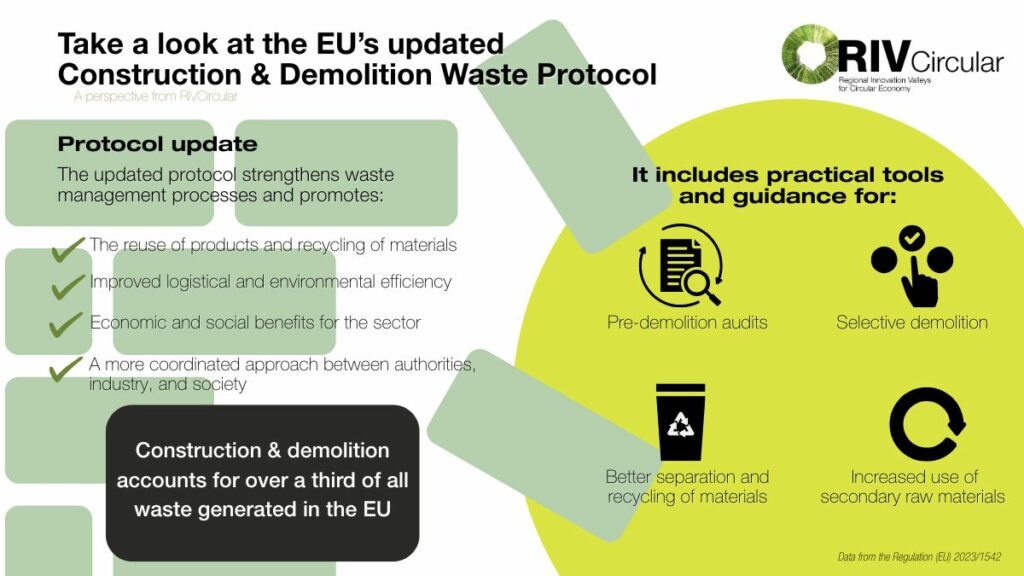
Both construction and demolition activities generate one of the largest waste streams in the EU. The updated protocol not only strengthens waste management processes but also promotes:
- The reuse of products and recycling of materials
- Improved logistical and environmental efficiency
- Economic and social benefits for the sector
- A more coordinated approach between authorities, industry, and society
For the first time, the protocol also incorporates Guidelines for pre-demolition and pre-renovation audits, with the aim of anticipating waste management needs from the earliest stages of a project.
Key Improvements in the New Protocol
The revised protocol introduces major enhancements, including more comprehensive audits, better selective demolition practices, more efficient waste logistics, advanced treatment and recovery processes, and stronger quality management.
The new guidelines provide more precise tools to identify hazardous waste, assess reuse potential, and properly classify different waste streams. On-site inspections are improved with more detailed sampling methods.
In addition, the protocol maintains a strong focus on the safe removal of hazardous materials (such as asbestos), while improving demolition planning and the separation of waste.
Regarding construction waste logistics, the updated guidelines define clearer procedures for transport, storage, and traceability, helping reduce environmental risks and improve transparency.
The document also incorporates more advanced technologies for treating waste such as concrete, plastics, metals, and insulation materials — promoting their cleaning, repair, and preparation for reuse.
Finally, the protocol reinforces requirements for auditing, certification, and standardization, increasing confidence in reused products. It also offers recommendations for authorities to develop effective control and enforcement policies.
Toward a More Circular and Resilient Sector
The updated Construction and Demolition Waste Management Protocol responds to the urgent need to integrate sustainability throughout the construction value chain. It also supports greater collaboration among businesses, public authorities, and citizens to achieve the EU’s sustainability and waste reduction goals.
RIVCircular, is committed to this and supports initiatives that innovate to reach these requirements.
Want to explore the full document?
Check out the updated EU CDW Management Protocol and the Guidelines for pre-demolition audits:
https://www.europeandemolition.org/communication/news/building-a-greener-future-eu-updates-construction-waste-protocol-for-2024