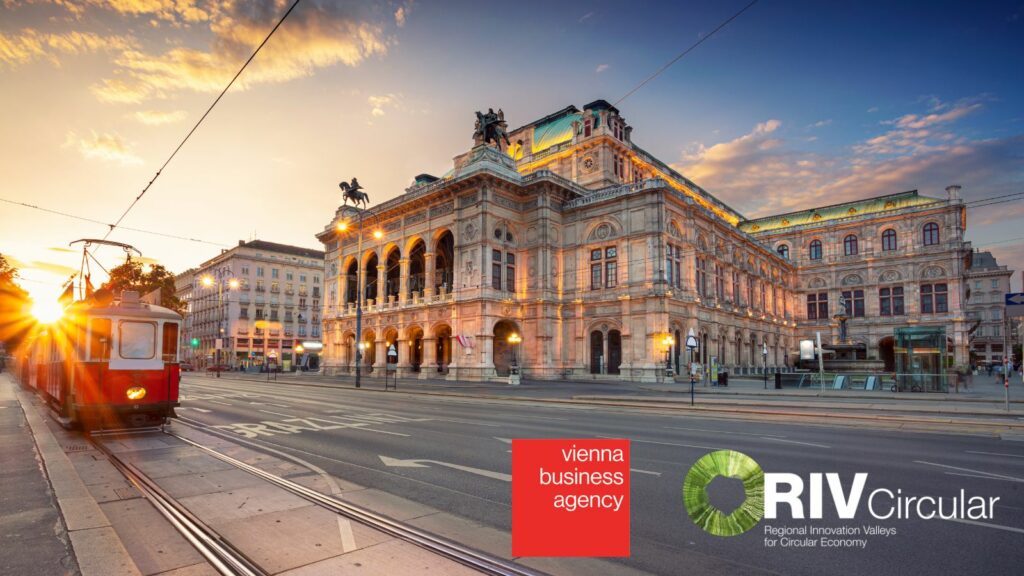
The Vienna region is a dynamic metropolitan economy in Central Europe, combining strong economic productivity, a vibrant research ecosystem and excellent international connectivity. Its strategic location between Western Europe and the fast-growing markets of Central and Eastern Europe positions Vienna as a key gateway for international collaboration, investment and business development.
Vienna generates around one quarter of Austria’s GDP and records a regional GDP per capita of approximately €56,600 (2024), making it the country’s dominant regional economy. The city’s economy is strongly service-oriented, with roughly three quarters of jobs concentrated in the private service sector. Key areas of activity include advanced business services and finance, ICT and technology, life sciences and health industries, tourism and culture, as well as sustainable technologies and circular economy solutions.
Research intensity is particularly high, with R&D expenditure reaching around 4% of regional GDP, above the national average. This strong research and innovation ecosystem fosters collaboration between universities, research centres, companies and public institutions, creating favourable conditions for innovation-driven projects and international partnerships.
Sustainability and circular economy principles are at the core of Vienna’s long-term development strategies. Through initiatives such as the Smart Climate City Strategy Vienna, the Vienna Climate Act and the Urban Development Plan 2035, the city has established ambitious objectives to reduce resource consumption and strengthen circular economic systems.
Key targets include reducing the city’s per capita material footprint by 30% by 2030, 40% by 2040 and 50% by 2050 compared to 2019 levels. Circular planning and construction in the building sector are expected to become the standard from 2030 onwards, while by 2050 all unavoidable waste generated in Vienna will be fully utilised.
The city is also implementing a comprehensive sustainable procurement programme to ensure that public purchasing supports climate protection, climate adaptation and circular economy objectives. In parallel, Vienna aims to increase the material efficiency of its economy by 30% by 2030 and by 40% by 2040.
Urban development policies reinforce these ambitions by prioritising compact urban structures, efficient land use and the conservation of natural resources.