Vienna Region: A Hub for Innovation, Research and Sustainable Development
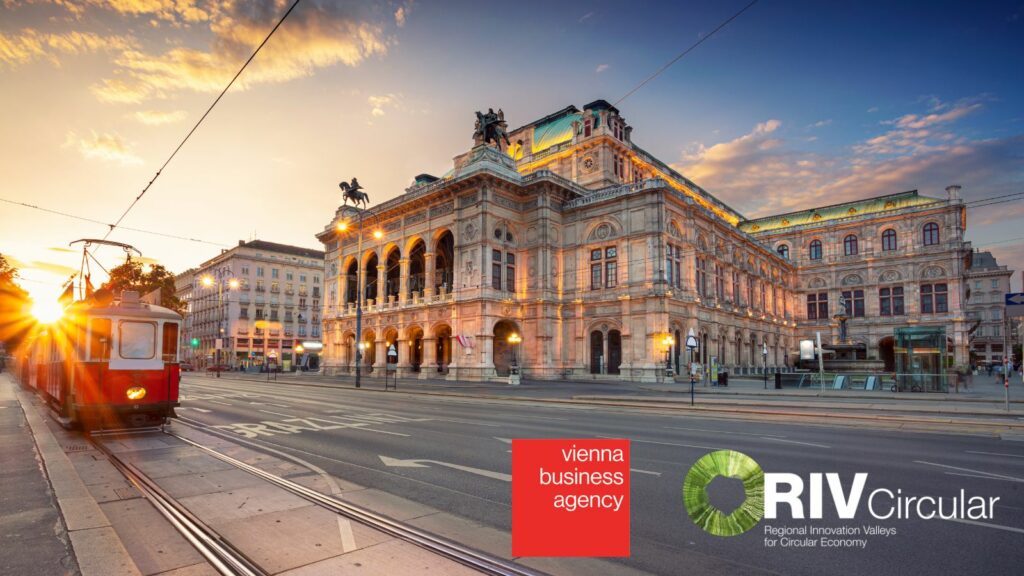
The Vienna region is a dynamic metropolitan economy in Central Europe, combining strong economic productivity, a vibrant research ecosystem and excellent international connectivity. Its strategic location between Western Europe and the fast-growing markets of Central and Eastern Europe positions Vienna as a key gateway for international collaboration, investment and business development. Vienna generates around one […]
What role does Waste-to-Energy play in the Circular Economy?
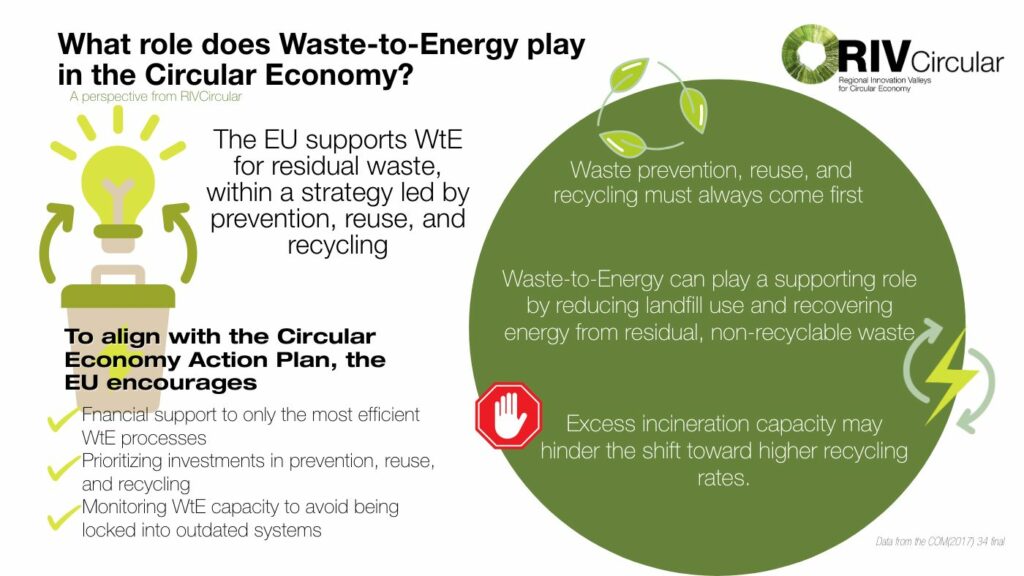
In 2017, the European Commission launched the communication “The role of waste-to-energy in the circular economy” (COM(2017) 34 final), as part of a set of key initiatives supporting Europe’s transition toward a circular economy. The document explains that while this practice can be useful, it should not be the first option. The top priority should […]
A New Chapter for Batteries in the EU: Regulation (EU) 2023/1542
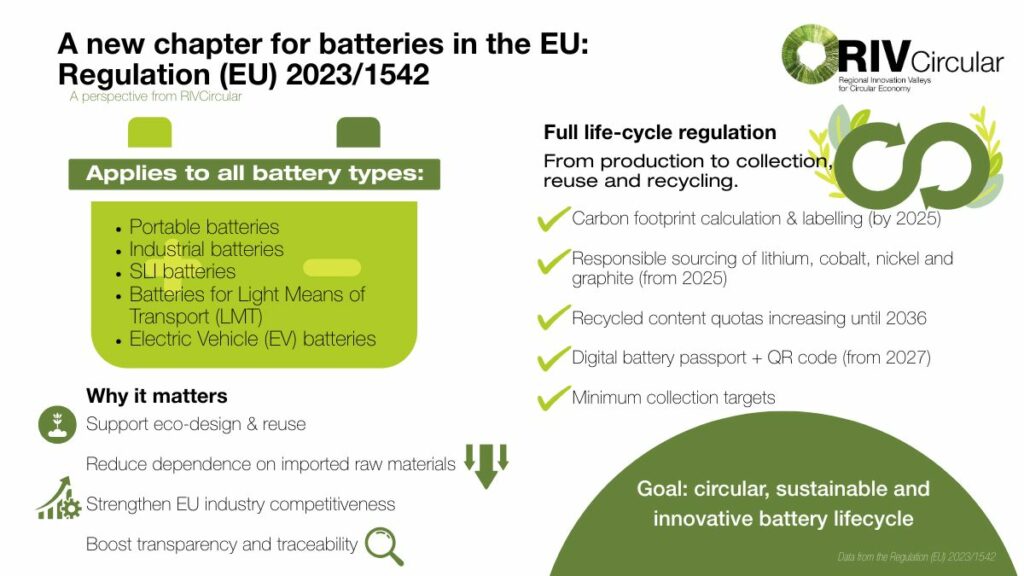
The European Union has entered a new era in its battery policy, placing sustainability, circular economy, and innovation at the heart of the energy transition. With the adoption of Regulation (EU) 2023/1542, the EU replaces the outdated Directive 2006/66/EC, updating its legal framework to align with current climate and circular economy objectives. This regulation, which […]
Europe’s Circular Revolution: Challenges and Opportunities
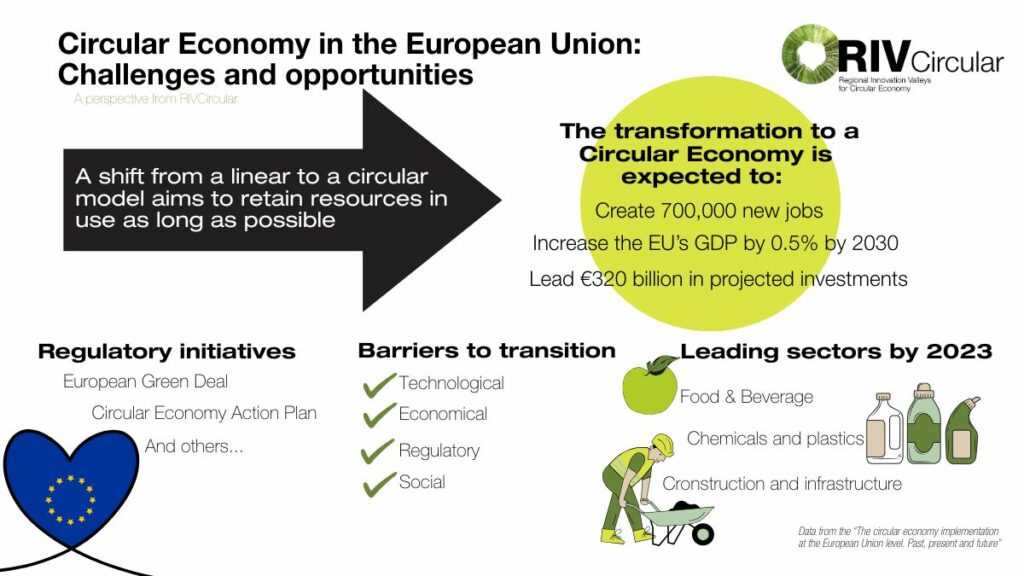
The Circular Economy (CE) is shaping the future of Europe, aiming to replace the traditional “take-make-dispose” model with sustainable, closed-loop systems. According to recent studies, recycling represents 24.2% of all circular strategies in the EU, with the Food & Beverage sector leading at 17.9%, followed by Chemicals and Plastics at 16.4%. The European Green Deal […]
Take a look at the EU’s updated Construction & Demolition Waste Protocol
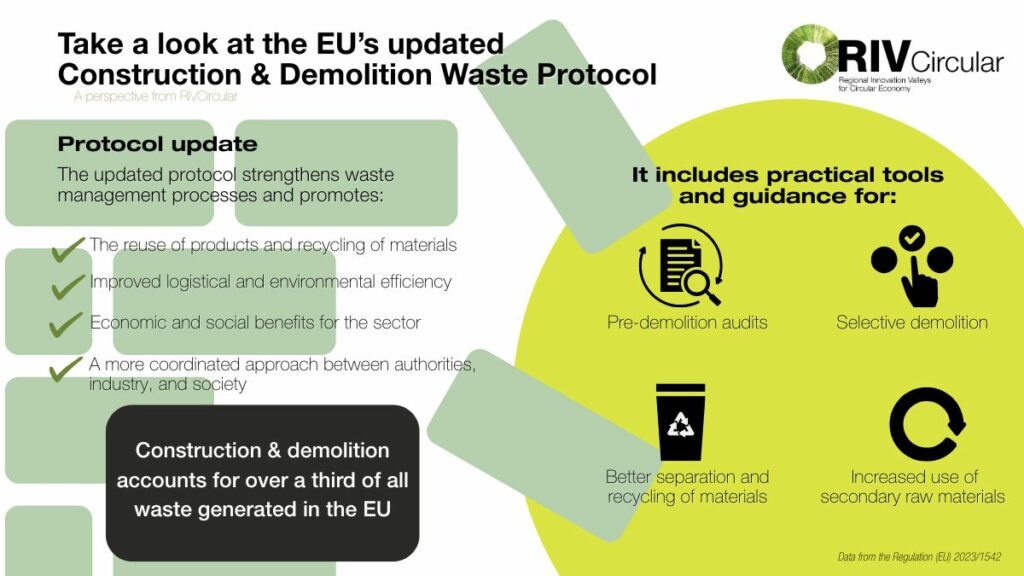
In 2024, the European Commission took a key step toward a more circular and sustainable economy in the construction sector by updating the Construction and Demolition Waste (CDW) Management Protocol. This new version, which replaces the 2017 edition, introduces substantial improvements in response to current environmental, technical, and regulatory challenges. Both construction and demolition activities […]
Capacity Building: A strategic pillar for Circular Economy
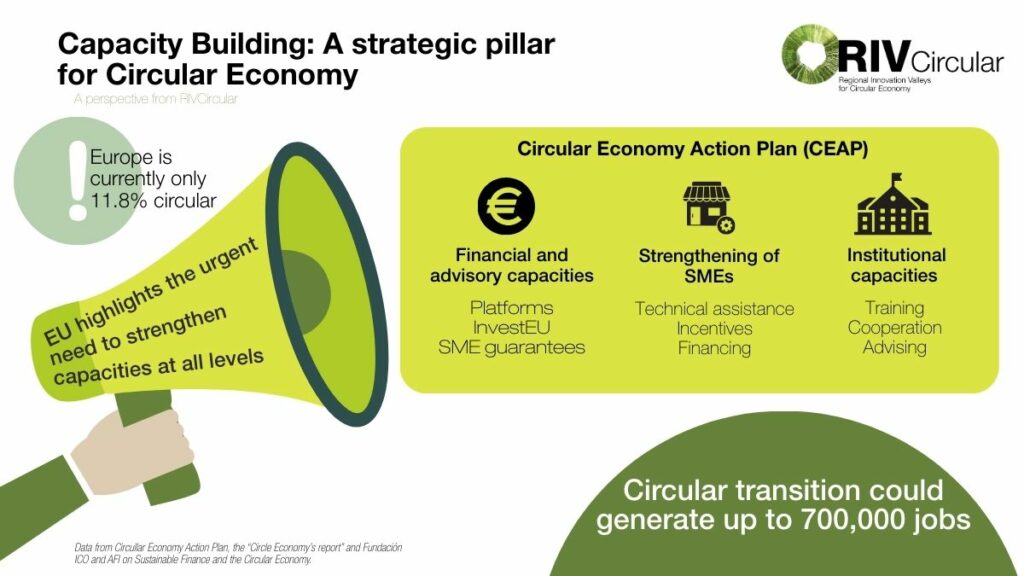
Capacity building has become a key component in driving the circular economy. This transition not only entails the adoption of new technologies, but also profound transformations in knowledge, skills, and institutional structures. By encompassing a wide range of technical disciplines and sectors, the circular economy demands a cross-sectoral approach that must be reflected in policies, […]
Challenges and Benefits of Sustainable and Innovative Public Procurement
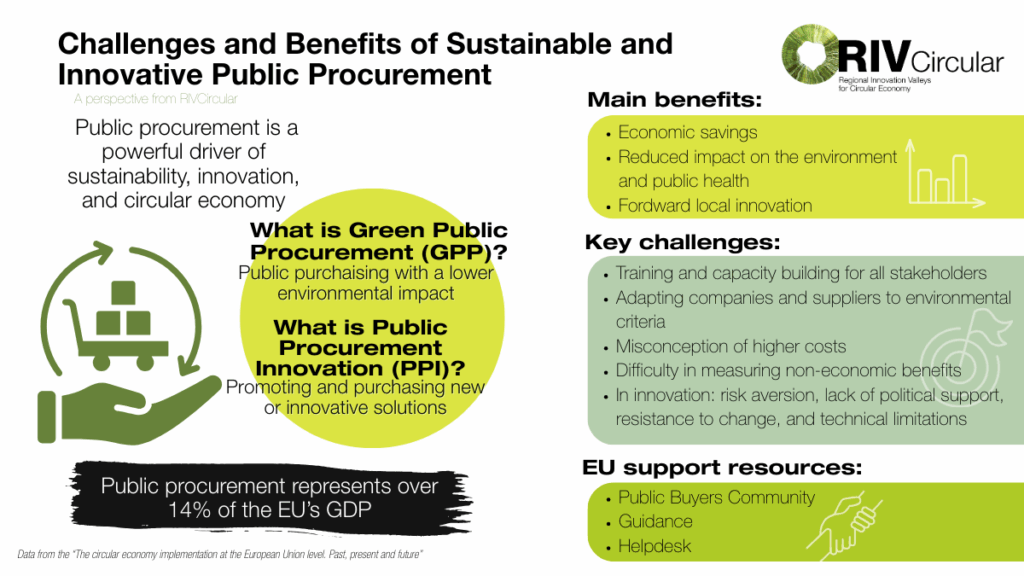
At RIVCircular, we see public procurement as a powerful driver of sustainability, innovation, and the circular economy. However, unlocking its full potential requires overcoming a range of challenges that demand coordinated action and greater awareness among all stakeholders. According to the Communication Public Procurement for a Better Environment (COM-2008-400), Green Public Procurement (GPP) is the […]
What role can digital innovations play to achieve circular economy?
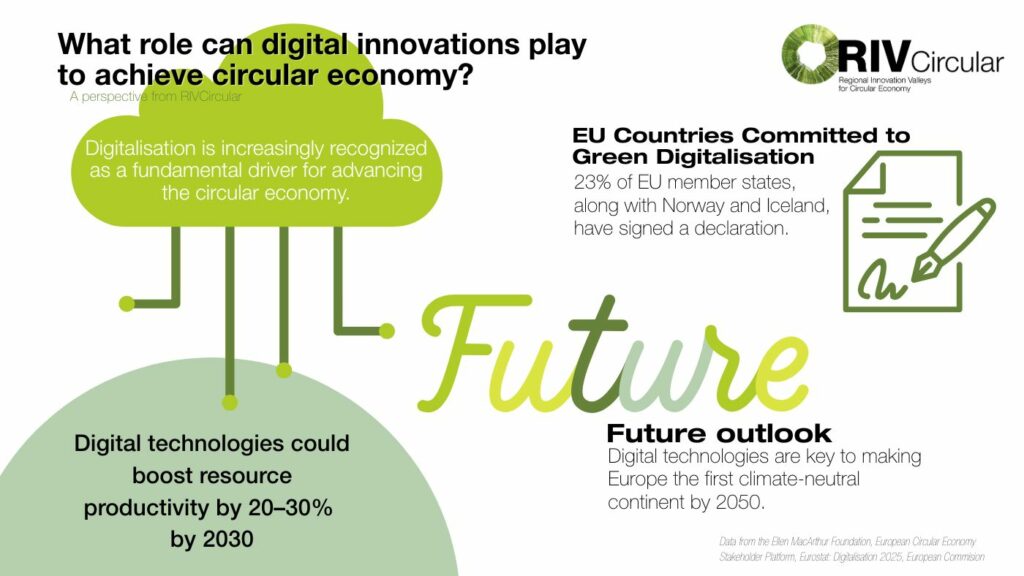
Digitalisation is increasingly recognized as a fundamental driver for advancing the circular economy. According to the Ellen MacArthur Foundation, digital technologies could boost resource productivity by 20-30% by 2030, enabling more efficient use of materials and energy throughout the entire product life cycle. Strategies such as reuse, rethink, reduce, repair, and recycle are being enhanced […]
RIVCircular marks a successful participation at the EU Regions Week
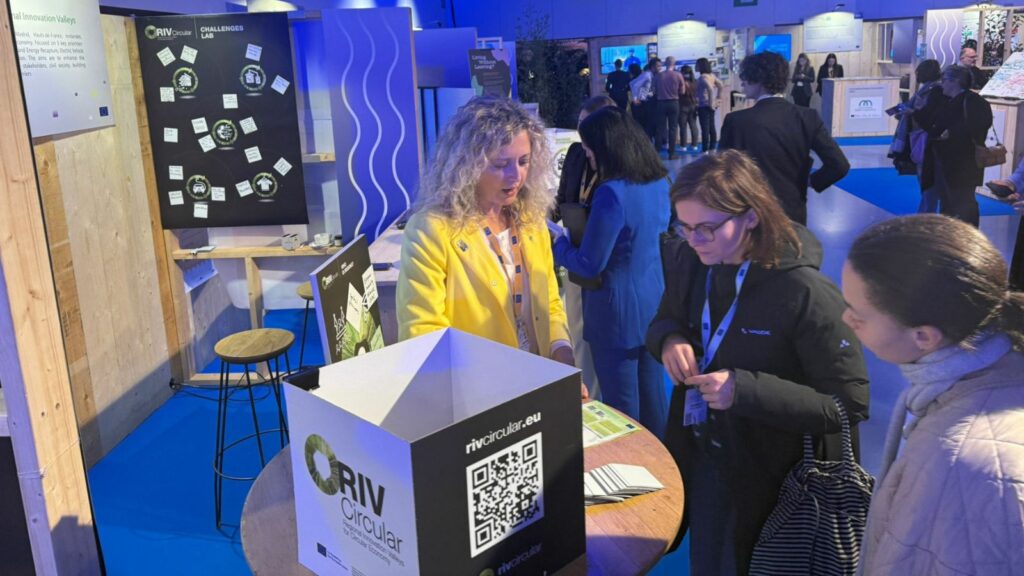
The RIVCircular Project achieved great success during its participation in the European Week of Regions and Cities (EU Regions Week), on 14–15 October in Brussels. The event was an excellent opportunity to present the project’s upcoming actions and to exchange ideas with other regions and initiatives committed to advancing the circular economy transition across Europe. […]